Do mushrooms boost immunity? What the research says
Mushrooms don't make you immune to anything, but some of them measurably support normal immune function. Here's how, and which ones have the evidence.
How mushrooms interact with the immune system
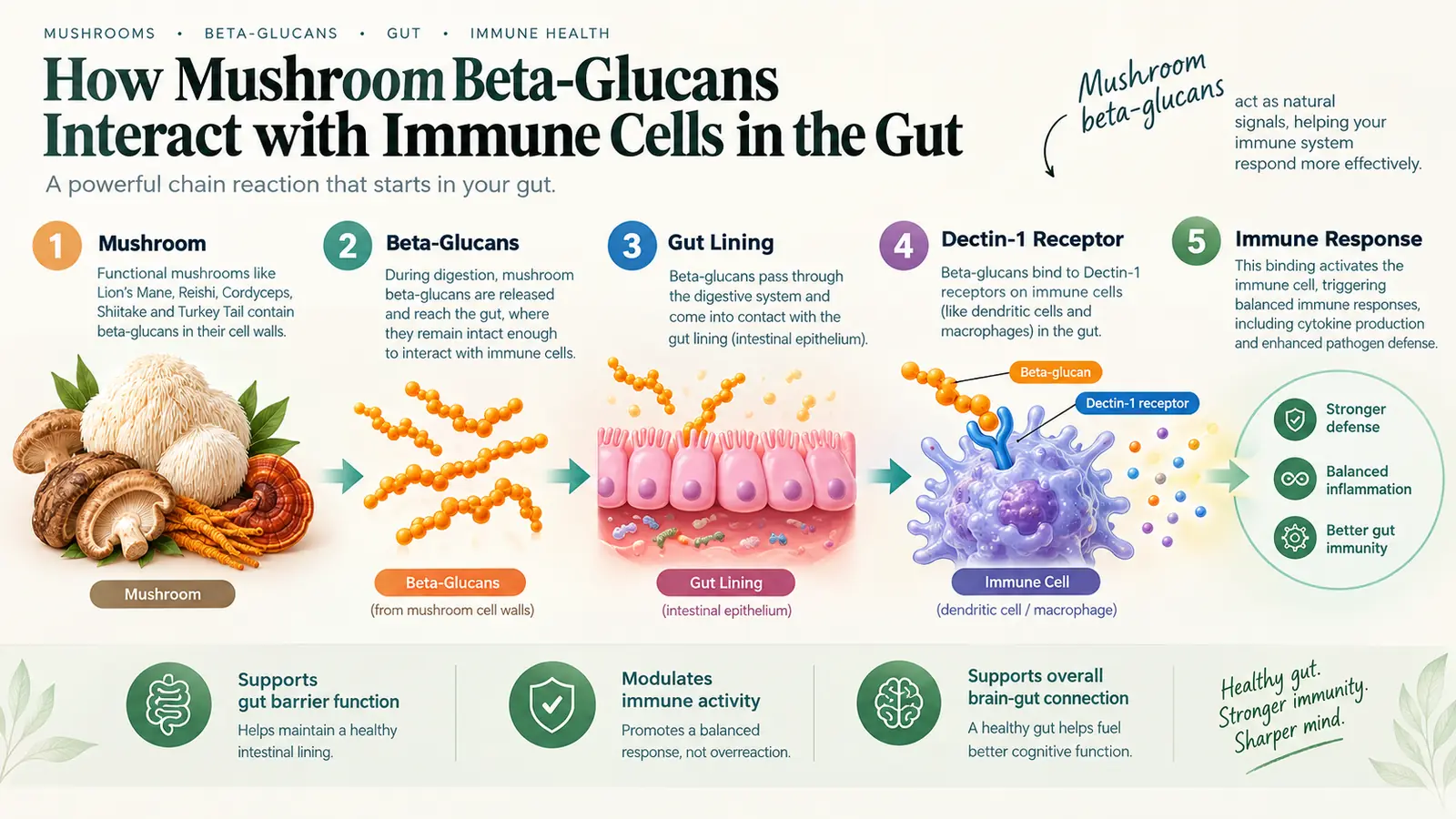
The key compounds are beta-glucans, long chains of sugar molecules in the mushroom cell wall. Your digestive system can't fully break them down, so they travel to the gut, where roughly 70% of the immune system sits. There, immune cells carry receptors (such as dectin-1) that recognize beta-glucans. Research suggests this recognition primes immune cells to respond more readily, a process sometimes called immune modulation rather than boosting.
That distinction matters. The goal is a balanced, responsive immune system, not an overactive one. That's also why people with autoimmune conditions should check with a doctor first.
What studies in people show
Shiitake: immune markers in 4 weeks
In a 2015 randomized trial, healthy young adults ate shiitake mushrooms daily for four weeks. Researchers measured increases in the proliferation of certain immune cells (gamma-delta T cells and natural killer T cells) and higher levels of secretory IgA, an antibody that guards the lining of the gut and airways.
Turkey tail: gut microbiome support
In a trial with healthy volunteers, the turkey tail polysaccharide PSP shifted gut bacteria in a prebiotic direction, encouraging beneficial species. Since the gut and immune system are so closely linked, gut support is part of how turkey tail is thought to help.
The best mushrooms for immune support
- Turkey tail (Trametes versicolor): the most researched, with the polysaccharides PSK and PSP and prebiotic effects.
- Reishi (Ganoderma lucidum): beta-glucans plus triterpenes, traditionally used for immune balance.
- Chaga (Inonotus obliquus): high antioxidant activity in lab studies, which helps protect cells, including immune cells, from oxidative stress.
- Shiitake and maitake: culinary mushrooms with their own beta-glucan research, easy to add to meals.
- Cordyceps (Cordyceps militaris): polysaccharides with immune-modulating activity in lab research, alongside its energy benefits.
See how these fit with focus and energy mushrooms in our functional mushrooms guide.
What mushrooms can't do
Mushroom supplements support normal immune function. They don't prevent colds, flu, or any disease, and they're not a substitute for medical care. The immune basics with the strongest evidence are consistent sleep, a varied diet with enough protein and produce, regular movement, and managing stress. Mushrooms fit on top of those.
How to take mushrooms for immune support
Beta-glucans are water-soluble, so they're best delivered through hot-water or dual extracts rather than raw powder. Look for fruiting-body extracts with a stated ratio. Take them daily; the human studies measured changes after about four weeks, not days. A tincture makes daily use easy. See the mushroom tincture guide.
Who should check with a doctor first
Because mushrooms interact with immune activity, talk to your doctor before taking them if you have an autoimmune condition, take immunosuppressants, are preparing for surgery or an organ transplant, take blood thinners, or are pregnant or nursing.
Frequently asked questions
Do mushrooms boost your immune system?
Some mushrooms support normal immune function through beta-glucans that interact with immune cells in the gut. Human trials have found changes in immune markers after about four weeks. They don't prevent illness on their own.
Which mushroom is best for immunity?
Turkey tail has the most research, followed by shiitake, reishi, and maitake. Many people use a blend to cover several species.
How long do mushrooms take to support immunity?
In the shiitake trial, immune marker changes were measured after four weeks of daily intake. Plan on consistent daily use.
Can I take immune mushrooms every day?
Yes, daily use is how they were studied. Check with a doctor if you have an autoimmune condition or take immune-affecting medication.
Sources
- Dai X, et al. "Consuming Lentinula edodes (shiitake) mushrooms daily improves human immunity: a randomized dietary intervention in healthy young adults." Journal of the American College of Nutrition, 2015. PubMed
- Pallav K, et al. "Effects of polysaccharopeptide from Trametes versicolor and amoxicillin on the gut microbiome of healthy volunteers." Gut Microbes, 2014. PubMed
- Wachtel-Galor S, et al. "Ganoderma lucidum (Lingzhi or Reishi): a medicinal mushroom." In Herbal Medicine: Biomolecular and Clinical Aspects, 2nd ed., 2011. PubMed