Benefits of cordyceps mushrooms: what the research shows
Cordyceps is the functional mushroom for energy and stamina. Here's what the human trials measured, how much they used, and how to take it.
What is cordyceps?
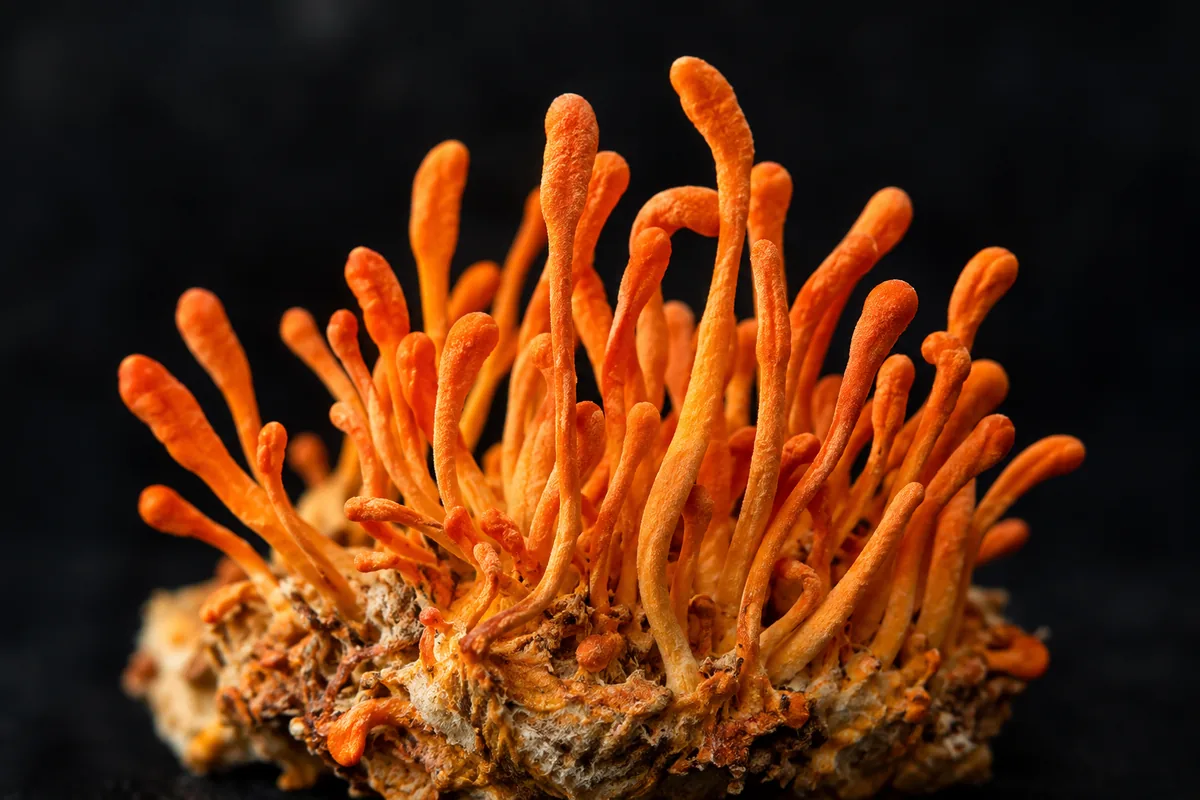
Cordyceps is a genus of fungi best known for a strange life cycle: wild Cordyceps sinensis grows out of caterpillar larvae in the Himalayan plateau. It's been prized in traditional Tibetan and Chinese practice for stamina for centuries, and it's so scarce that wild specimens sell for thousands of dollars per pound.
Supplements don't use wild cordyceps. They use one of two cultivated sources:
- Cordyceps militaris, grown as orange fruiting bodies on a substrate. It naturally contains more cordycepin, the compound most linked to cordyceps' effects.
- Cs-4, a fermented mycelium strain of C. sinensis developed for research and supplements.
Both have human research. C. militaris fruiting bodies are the most common choice in modern supplements, including Flow Drops.
6 benefits of cordyceps mushrooms
1. Supports natural energy production
Cordycepin is structurally similar to adenosine, a building block of ATP, the molecule your cells use for energy. Lab research suggests cordyceps compounds influence how cells produce and use ATP. That's the proposed reason people describe cordyceps energy as steady rather than a spike.
2. May improve tolerance to high-intensity exercise
In a 2017 placebo-controlled trial, active adults took a mushroom blend built around C. militaris. After three weeks, the cordyceps group showed improvements in VO2max (peak oxygen use), time to exhaustion, and ventilatory threshold compared with placebo. After one week, the differences were small, which suggests the effect builds with daily use.
3. Supports oxygen use in adults over 50
A 2010 trial gave healthy adults aged 50 to 75 the Cs-4 strain or placebo for 12 weeks. The cordyceps group improved on metabolic and ventilatory thresholds during exercise testing, which are markers of how efficiently the body uses oxygen before fatigue sets in.
4. Energy without caffeine
Cordyceps contains no caffeine, so it's popular as a morning or pre-workout option for people who want to cut back on coffee or avoid afternoon crashes. You can take it alongside coffee or in place of a second cup.
5. Antioxidant activity
Cordyceps polysaccharides show antioxidant activity in lab studies, helping neutralize free radicals produced during exercise and normal metabolism. Human data on this is limited.
6. Supports immune function
Like most functional mushrooms, cordyceps contains beta-glucans and other polysaccharides that interact with immune cells in lab research. For immune support specifically, turkey tail has stronger evidence; see do mushrooms boost immunity.
How much cordyceps did the studies use?
The 12-week Cs-4 trial used about 1 gram per day in capsules. The 2017 trial used 4 grams per day of a multi-mushroom blend. Most cordyceps supplements provide far less extract than that on its own, which is one reason daily consistency matters. Follow the label on whatever product you choose.
When to take cordyceps
Morning or 30 to 60 minutes before exercise are the most common times. Some people find it too energizing late in the day, so avoid evening doses until you know how you respond.
Cordyceps and lion's mane together
Cordyceps covers physical energy and stamina; lion's mane covers mental focus. That's why they're one of the most common pairings in functional mushroom blends. Read more about lion's mane in lion's mane and memory, or see all five core species in our functional mushrooms guide.
Side effects and cautions
Cordyceps is generally well tolerated in studies. Mild stomach upset or dry mouth are occasionally reported. Talk to your doctor before taking it if you take blood thinners, blood-sugar medication, or immunosuppressants, if you have an autoimmune condition, or if you're pregnant or nursing.
Frequently asked questions
What does cordyceps do for the body?
Cordyceps is studied mainly for supporting energy production and exercise tolerance. Human trials found improvements in oxygen use and time to exhaustion after three to twelve weeks of daily use.
How long does it take for cordyceps to work?
In the 2017 exercise trial, meaningful differences appeared after three weeks of daily use, not after one week. Plan on at least three to four weeks.
Is Cordyceps militaris as good as Cordyceps sinensis?
Cultivated C. militaris naturally contains more cordycepin than C. sinensis and has its own human research. Wild C. sinensis is rarely used in supplements because of its cost and scarcity.
Does cordyceps have caffeine?
No. Cordyceps is caffeine-free, which is why it's used as a coffee alternative or stim-free pre-workout.
Can I take cordyceps every day?
Yes. The human studies used daily dosing for up to 12 weeks. Check with your doctor if you take medication or have a medical condition.
Sources
- Hirsch KR, et al. "Cordyceps militaris improves tolerance to high-intensity exercise after acute and chronic supplementation." Journal of Dietary Supplements, 2017. PubMed
- Chen S, et al. "Effect of Cs-4 (Cordyceps sinensis) on exercise performance in healthy older subjects: a double-blind, placebo-controlled trial." Journal of Alternative and Complementary Medicine, 2010. PubMed
- Tuli HS, et al. "Pharmacological and therapeutic potential of Cordyceps with special reference to cordycepin." 3 Biotech, 2014. PubMed