Functional mushrooms: what they are and the five that matter
A plain-language guide to the mushrooms studied for focus, energy, stress, and immune support, and how to tell a real extract from ground-up grain.
What makes a mushroom "functional"?
"Functional" is borrowed from functional foods: foods with a benefit beyond calories and vitamins. A button mushroom is a food. Lion's mane is still a food, but it also contains compounds, called hericenones, that researchers study for their effect on nerve growth factor. That second layer is what earns the label.
Most functional mushrooms have a long history in traditional Chinese and Japanese practice, where reishi and cordyceps were prized tonics. Modern research has picked out the compounds that seem to matter most:
- Beta-glucans, polysaccharides in the mushroom cell wall that interact with immune cells in the gut.
- Triterpenes, bitter compounds concentrated in reishi and chaga, studied for stress and inflammation pathways.
- Hericenones and erinacines, specific to lion's mane, studied for nerve growth factor.
- Cordycepin and adenosine, specific to cordyceps, linked to cellular energy (ATP) and oxygen use.
The five functional mushrooms with the most research
These five show up in most quality blends because each covers a different job.
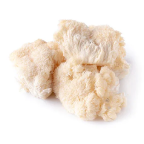
Lion's mane
The most studied mushroom for focus and memory. Early human trials point to modest gains on attention and recall tests.
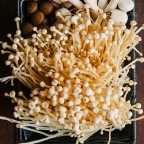
Cordyceps
The energy and endurance mushroom. Studied for oxygen use and exercise tolerance, with no caffeine involved.
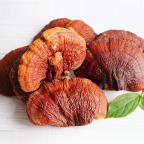
Reishi
Used for centuries as a calming tonic. Rich in triterpenes and beta-glucans, studied for stress and immune balance.
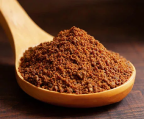
Chaga
A dense birch-tree conk with high antioxidant activity in lab tests. Mostly studied in the lab so far.
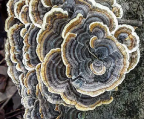
Turkey tail
The best-documented mushroom for immune and gut support, thanks to its polysaccharides PSK and PSP.
Lion's mane (Hericium erinaceus)
A shaggy white mushroom that grows on hardwood. It's the go-to for focus and memory. Small human trials have found improvements on cognitive test scores in healthy adults over 50 after 12 weeks, and faster performance on an attention task in young adults after a single dose. Read the full breakdown in lion's mane and memory.
Cordyceps (Cordyceps militaris)
An orange, club-shaped mushroom. Wild Cordyceps sinensis grows on caterpillars at high altitude and is extremely expensive, so almost all supplements use cultivated C. militaris, which is naturally richer in cordycepin. It's studied for energy and exercise tolerance. See the benefits of cordyceps mushrooms.
Reishi (Ganoderma lucidum)
A glossy, red-brown shelf mushroom known in China as lingzhi. It's woody and bitter, so it's taken as an extract rather than eaten. Reishi is traditionally used as a calming tonic, and its triterpenes and beta-glucans are studied for stress response and immune balance. Human evidence is mixed, so treat it as a supporting ingredient rather than the star.
Chaga (Inonotus obliquus)
Chaga isn't a classic mushroom cap. It's a hard, charcoal-black growth on birch trees. In lab tests it has very high antioxidant activity, and it's rich in melanin and betulinic acid drawn from the birch. Most chaga research is in cells and animals, so human benefits are still unconfirmed.
Turkey tail (Trametes versicolor)
A thin, striped, fan-shaped mushroom that looks like a turkey's tail feathers. It contains two heavily studied polysaccharides, PSK and PSP. In a trial with healthy volunteers, PSP shifted gut bacteria in a prebiotic direction. It's the anchor of most mushrooms-for-immunity formulas.
Other functional mushrooms you'll see
Shiitake (Lentinula edodes) and maitake (Grifola frondosa) are culinary mushrooms with their own beta-glucan research. In one trial, healthy young adults who ate shiitake daily for four weeks showed changes in immune cell activity. Tremella is used mostly for skin hydration. Agaricus blazei and mesima appear in some immune blends. They're useful, but the five above have the strongest case for focus, energy, and everyday resilience.
Fruiting body vs. mycelium: the question most brands dodge
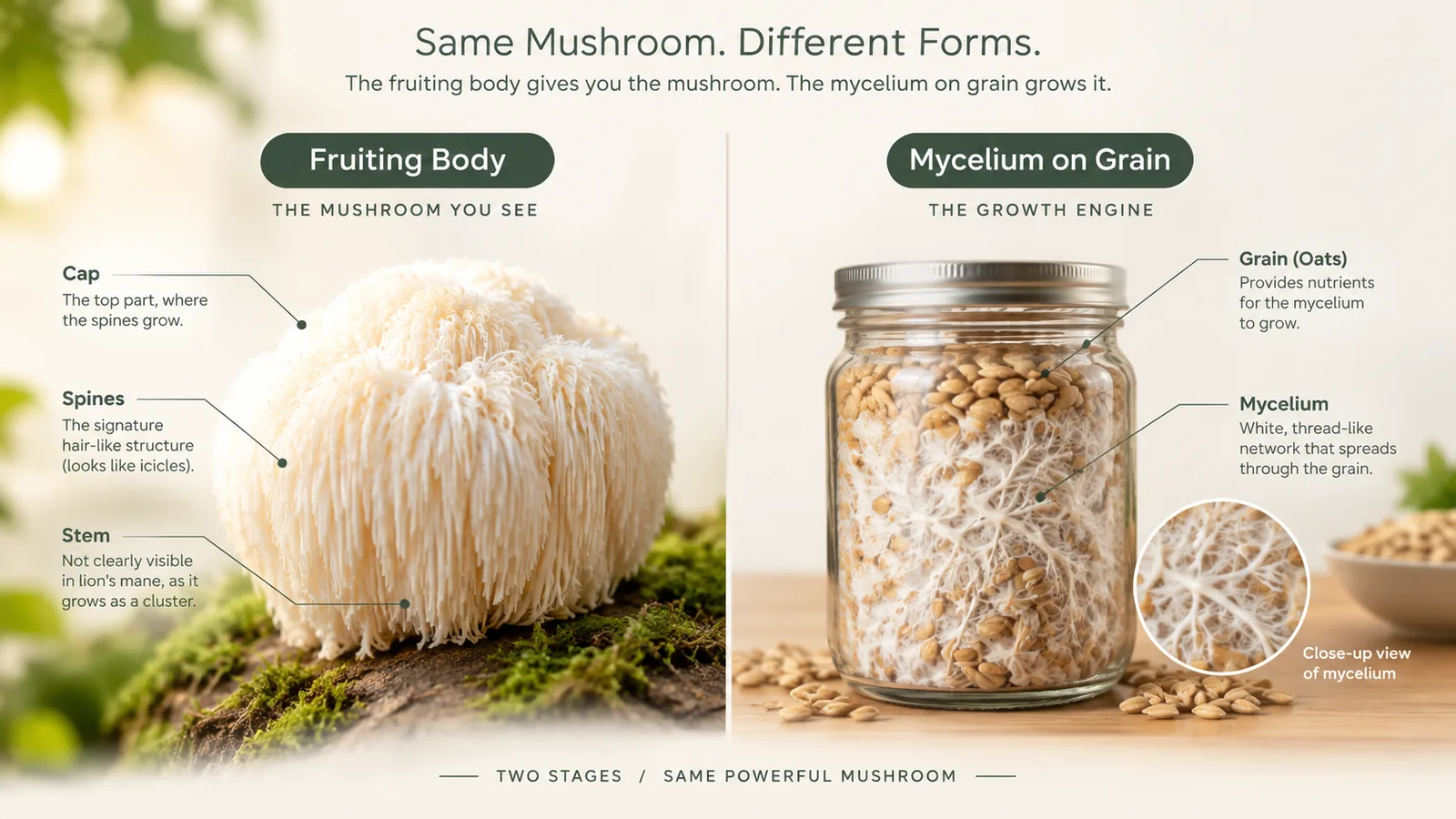
A mushroom has two main parts. The fruiting body is what you'd recognize as the mushroom. The mycelium is the root-like network underneath.
Many inexpensive products grow mycelium on sterilized oats or rice, then dry and grind the whole block, grain included. The result can contain far more starch than mushroom, with low beta-glucan levels. Some labels call this "full spectrum" or "myceliated grain."
Mycelium isn't worthless. Lion's mane mycelium is where erinacines are found, for example. But unless the label discloses how much grain is present and what the active compound content is, fruiting-body extracts are the safer bet. Labels that say "fruiting body" or "100% mushroom" and list an extract ratio are telling you what you're paying for.
Why functional mushrooms need to be extracted
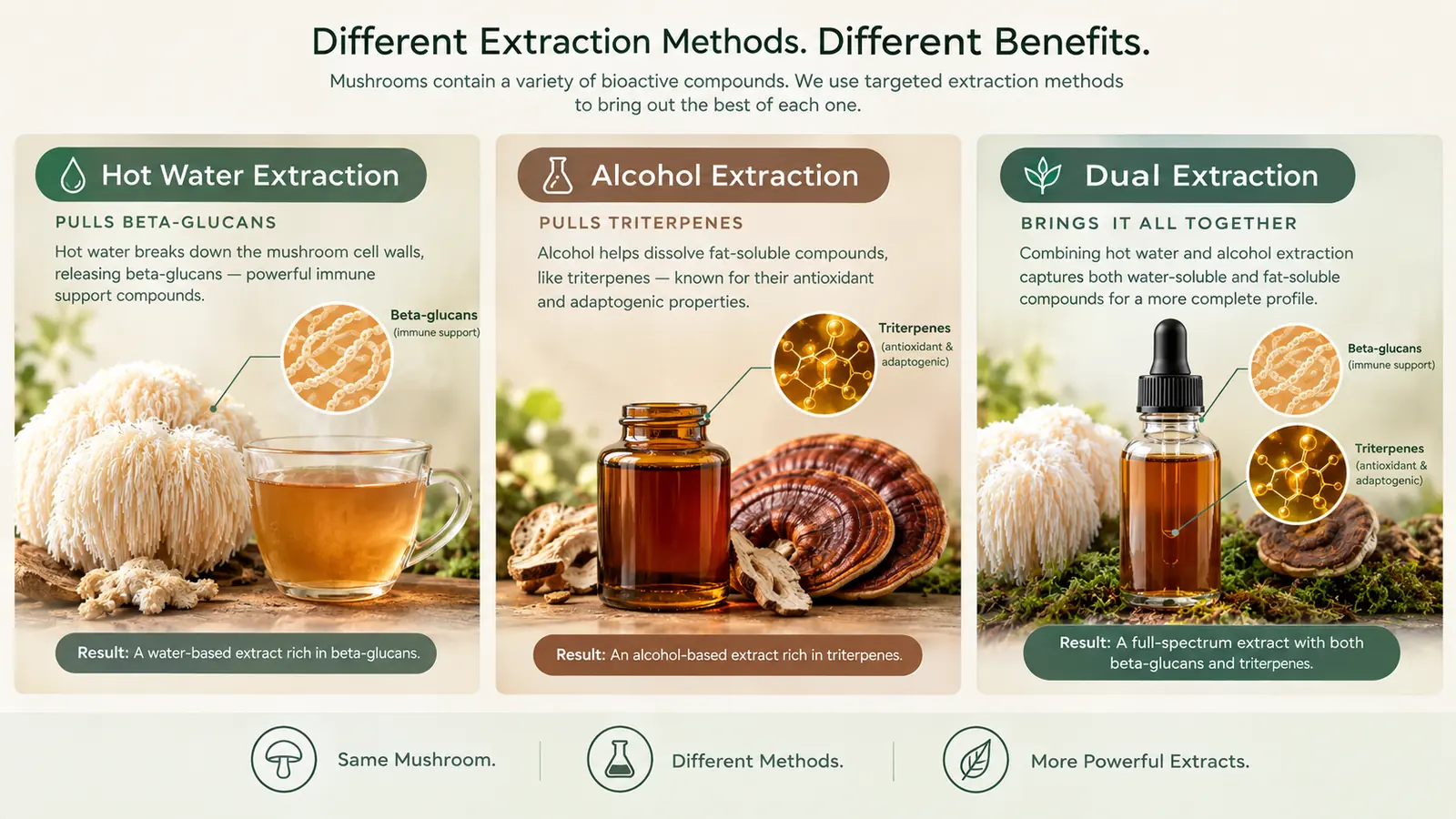
Mushroom cell walls are made of chitin, the same tough material in insect shells. Human digestion doesn't break chitin down well, so raw mushroom powder releases only part of its compounds. Extraction solves that:
- Hot-water extraction pulls out water-soluble beta-glucans.
- Alcohol extraction pulls out triterpenes and other fat-soluble compounds.
- Dual extraction uses both, which matters most for reishi and chaga.
An extract ratio like 10:1 means 10 kg of dried mushroom went into 1 kg of extract. That's why a label can state both an extract weight and a larger "mushroom equivalent." Learn how this plays out in liquid form in our mushroom tincture guide.
How to take functional mushrooms
You'll find them as tinctures, capsules, powders, gummies, and coffee blends. The format matters less than the extract quality, but it does affect how consistently you'll take them. Our functional mushroom products guide compares every format side by side.
Whatever form you choose, consistency is key. The human studies ran for 3 to 12 weeks of daily use.
Safety and who should check with a doctor first
Functional mushrooms are generally well tolerated. Talk to your doctor first if you're pregnant or nursing, take blood thinners or blood-sugar medication (reishi and some others may interact), take immunosuppressants, or have a mushroom allergy. Chaga is high in oxalates, so people with a history of kidney stones should ask before taking it long-term.
Frequently asked questions
What are the benefits of functional mushrooms?
Depending on the species, functional mushrooms are studied for focus and memory (lion's mane), energy and exercise tolerance (cordyceps), stress response (reishi), antioxidant activity (chaga), and immune and gut support (turkey tail). Evidence ranges from small human trials to mostly lab research.
Are functional mushrooms safe to take every day?
Most people tolerate daily use well, and the human studies used daily dosing for weeks to months. Check with a doctor if you're pregnant, nursing, on medication, or have a mushroom allergy.
Can you take multiple functional mushrooms together?
Yes. They're commonly combined because they target different systems. A blend is also simpler than buying and dosing five separate products.
Do functional mushrooms get you high?
No. They contain no psilocybin or other psychoactive compounds.
Sources
- Li IC, et al. "Neurohealth properties of Hericium erinaceus mushrooms enriched with erinacines." Behavioural Neurology, 2018. PubMed
- Wachtel-Galor S, et al. "Ganoderma lucidum (Lingzhi or Reishi): a medicinal mushroom." In Herbal Medicine: Biomolecular and Clinical Aspects, 2nd ed., 2011. PubMed
- Tuli HS, et al. "Pharmacological and therapeutic potential of Cordyceps with special reference to cordycepin." 3 Biotech, 2014. PubMed
- Pallav K, et al. "Effects of polysaccharopeptide from Trametes versicolor and amoxicillin on the gut microbiome of healthy volunteers." Gut Microbes, 2014. PubMed
- Dai X, et al. "Consuming Lentinula edodes (shiitake) mushrooms daily improves human immunity: a randomized dietary intervention in healthy young adults." Journal of the American College of Nutrition, 2015. PubMed